
Experts from Four Countries Promote the Vision of “No Child Deprived of Liberty”
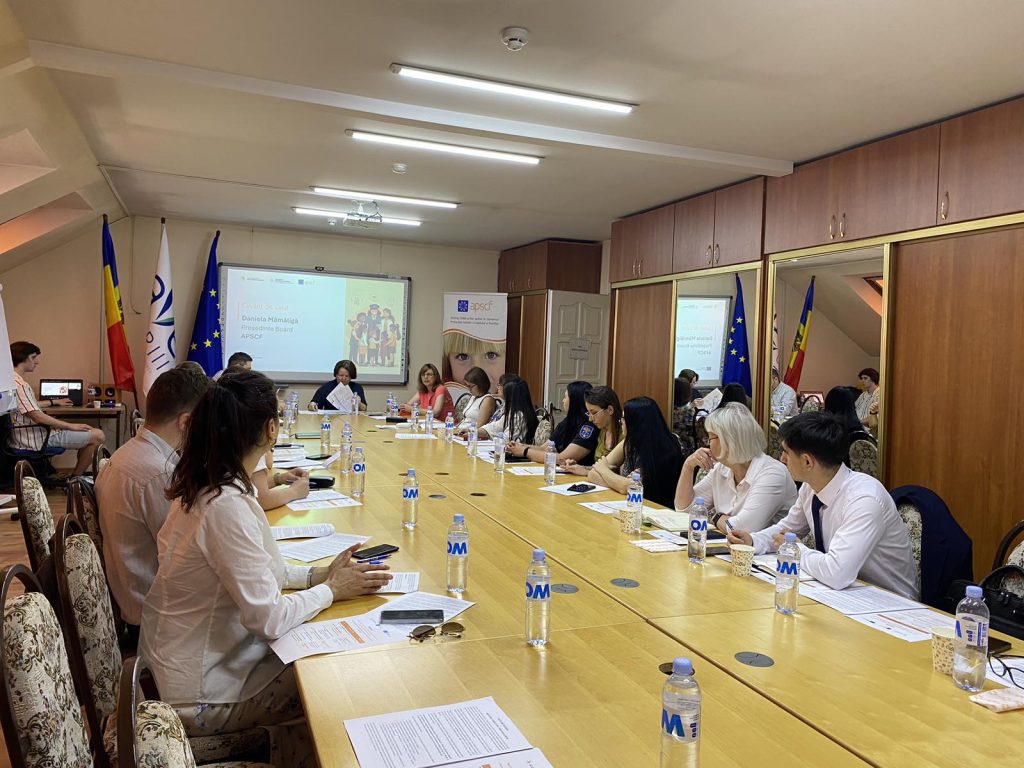
A Position Paper on improving child justice systems in the Republic of Moldova, Ukraine, Armenia, and Bulgaria was presented today in Chișinău during an event organized by the Alliance of Active NGOs in the Field of Child and Family Protection (APSCF).
The event brought together specialists, experts, and representatives of civil society organizations who reviewed the current state of juvenile justice and discussed solutions for better protecting the rights of children in conflict with the law.
The event was organized within the framework of the regional project “Bridging the Gaps: Advancing Child-Friendly Justice in the Eastern Partnership (EaP) Countries”, implemented with the support of the Eastern Partnership Civil Society Forum and the European Union. The project aims to strengthen regional cooperation and facilitate the exchange of experience among civil society organizations working in the fields of child protection and child justice.
The initiative promotes the development of child-friendly justice systems based on prevention, rehabilitation, and community-based interventions for children in conflict with the law or at risk of offending, while avoiding punitive approaches and the use of detention.
The Position Paper advocates for a child-centred approach that prioritizes the prevention of juvenile offending, rehabilitation, and social reintegration rather than punishment. Participants emphasized that deprivation of liberty should be used only as a measure of last resort and only when no appropriate alternatives are available.
The vision underpinning the Position Paper is encapsulated in the message “No Child Deprived of Liberty”. It is grounded in the belief that every child deserves support, education, and genuine opportunities for reintegration into society, even when they have come into conflict with the law.
Key recommendations include strengthening prevention and early intervention measures, increasing investment in education, child protection, and social services, developing and expanding alternatives to detention, improving cooperation among institutions working with children, and ensuring procedures that are adapted to children’s needs and guided by the best interests of the child.
Participants examined challenges and good practices across the four countries and contributed to the finalization of a common set of recommendations aimed at improving public policies and developing more effective services for children in vulnerable situations.
The project is coordinated by APSCF (Republic of Moldova) in partnership with Partnership for Every Child (Ukraine), the Armenian Constitutional Rights-Protective Centre NGO and Journalists’ Club “Asparez” NGO (Armenia), as well as the Center for the Study of Democracy (Bulgaria). The consortium brings together organizations with expertise in child protection, juvenile justice, research, policy analysis, and advocacy, with the shared objective of promoting more effective, inclusive, and child-friendly justice systems.